
Designing for Teens in Public Space
Across many of the projects we work on - schools, parks, and shared public spaces - one challenge comes up again and again: how to design for teenagers in a way that feels appropriate, inclusive, and genuinely engaging.
Traditional playgrounds tend to serve younger children well, but their usefulness often tapers off as kids grow older. At the other end of the spectrum, skate parks and formal sports facilities can be highly successful, but they don’t suit everyone. They often require equipment, confidence, or a particular skill set, which can unintentionally limit who feels welcome to participate.
What’s left is a gap. And it’s one many public spaces quietly struggle with.
Why This Matters
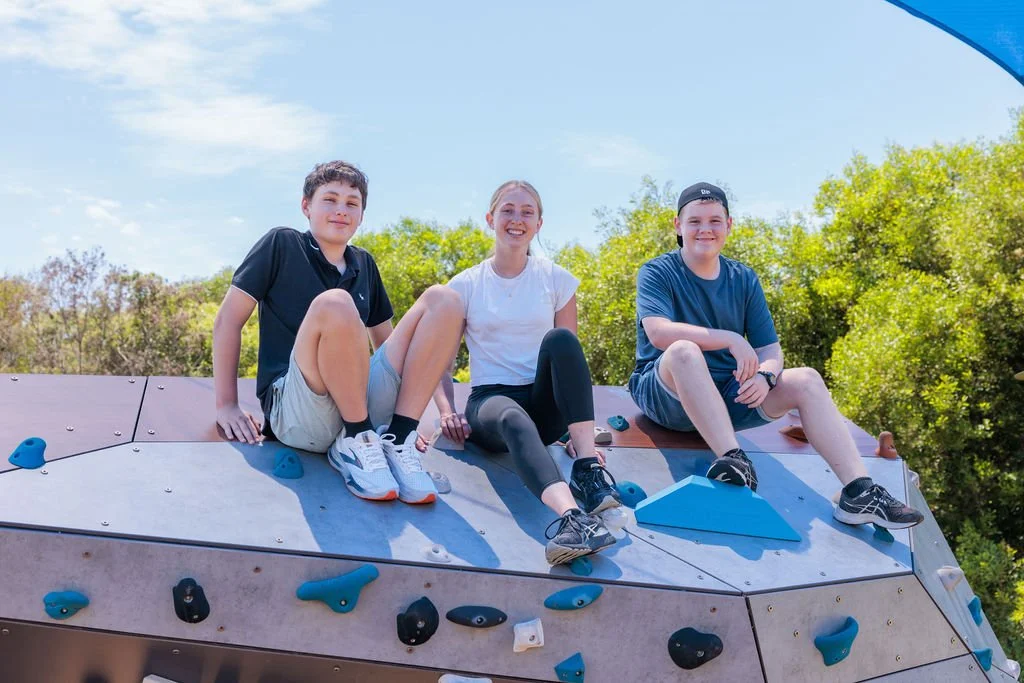
When teens don’t see themselves reflected in a space, they tend to drift to the edges of it - or avoid it altogether. The result is often under-used areas, reduced mixed-age interaction, and fewer opportunities for informal movement and social connection.
In some cases, this lack of engagement is misinterpreted as anti-social behaviour, when in reality it’s often a design issue - spaces that haven’t been shaped with teenagers in mind. Research into youth-focused public spaces, including skate parks, has shown that when environments are thoughtfully designed and integrated, they are more likely to support positive social behaviour rather than contribute to conflict or exclusion (Bradley, 2010).
For councils, landscape architects, schools, and broader project teams, the challenge is rarely a lack of intent. It’s about balancing safety, inclusion, budget, longevity, and community expectations, while delivering something that feels relevant to a group that’s often overlooked in public design.
Rethinking How Teens Engage
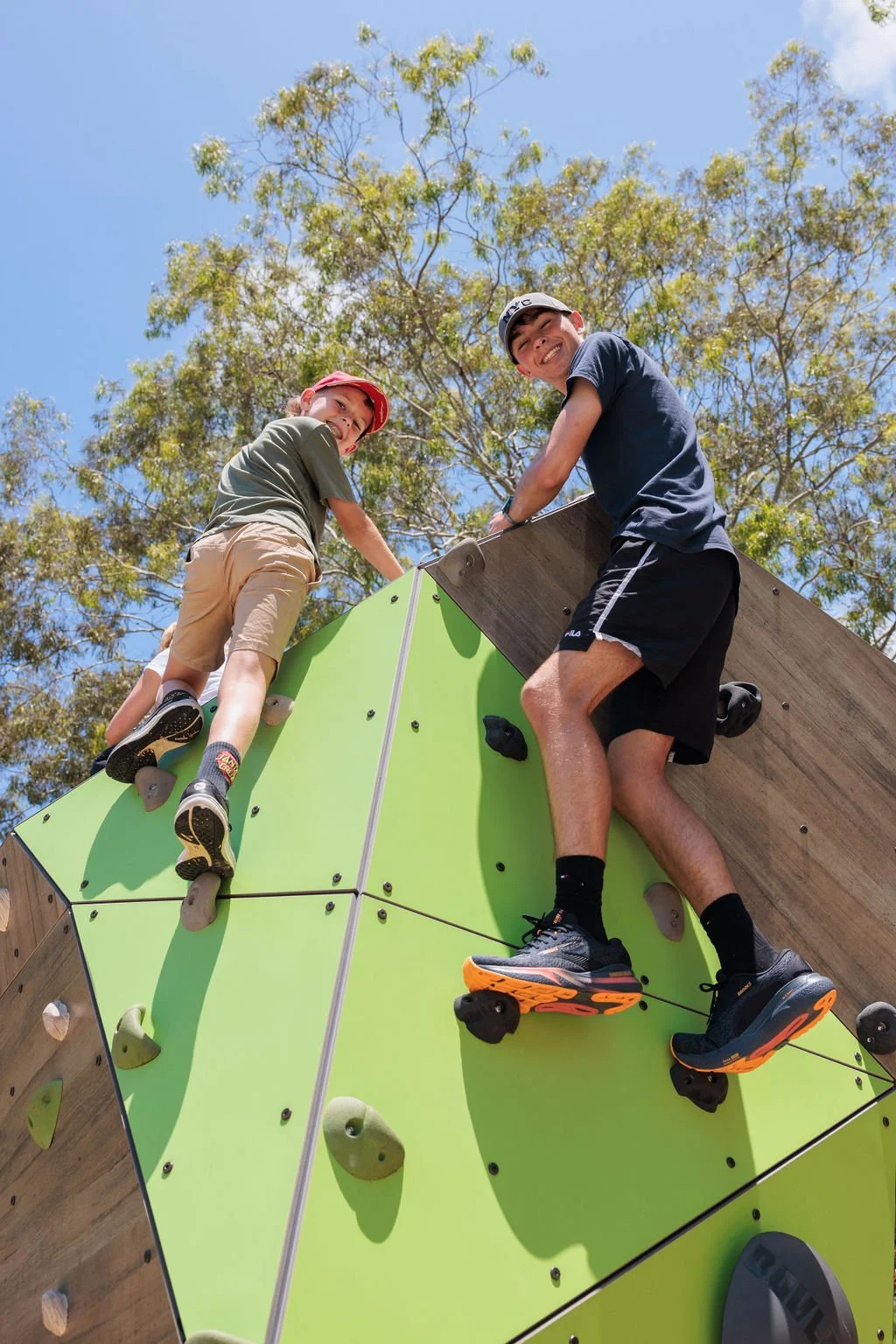
One thing we’ve noticed over time is that teenagers are far more likely to engage with environments that offer autonomy. Spaces that don’t prescribe behaviour or performance, but instead allow for self-directed movement and informal social interaction.
Climbing - particularly Bouldering - supports this kind of engagement naturally. It doesn’t require teams, equipment, or instruction. There’s no single way to use it. It allows for quiet challenge, observation, problem-solving, and social connection without pressure.
This aligns with broader research into adolescent movement, which has shown that climbing-based activities can support confidence and self-efficacy when participation is self-paced and non-competitive (Krüger et al., 2019).
In many ways, bouldering sits between play and sport - and that ambiguity is exactly what makes it appealing to older users.

Bouldering as a Precinct Complement - or a Stand-Alone Element
In our experience, BOULDERING® works effectively both as a stand-alone feature and as a complementary element within broader precincts.
As a single intervention, it can activate underused areas, create a reason to pause and gather, and introduce movement without dominating a site. Within larger precincts - including those that already feature skate parks, pathways, seating, and social infrastructure - it can sit alongside other uses to provide an additional layer of engagement.
This is particularly valuable in youth-focused precincts. Where skate parks often attract confident, equipment-based users, bouldering offers an adjacent option that is accessible, equipment-free, and open-ended. It broadens who feels welcome in the space without competing with existing uses, and can be integrated relatively easily through considered placement, scale, and adjacency.
Importantly, this isn’t about positioning bouldering as the only solution. It’s one element within a wider mix, designed to contribute to overall precinct outcomes.
What We See on the Ground
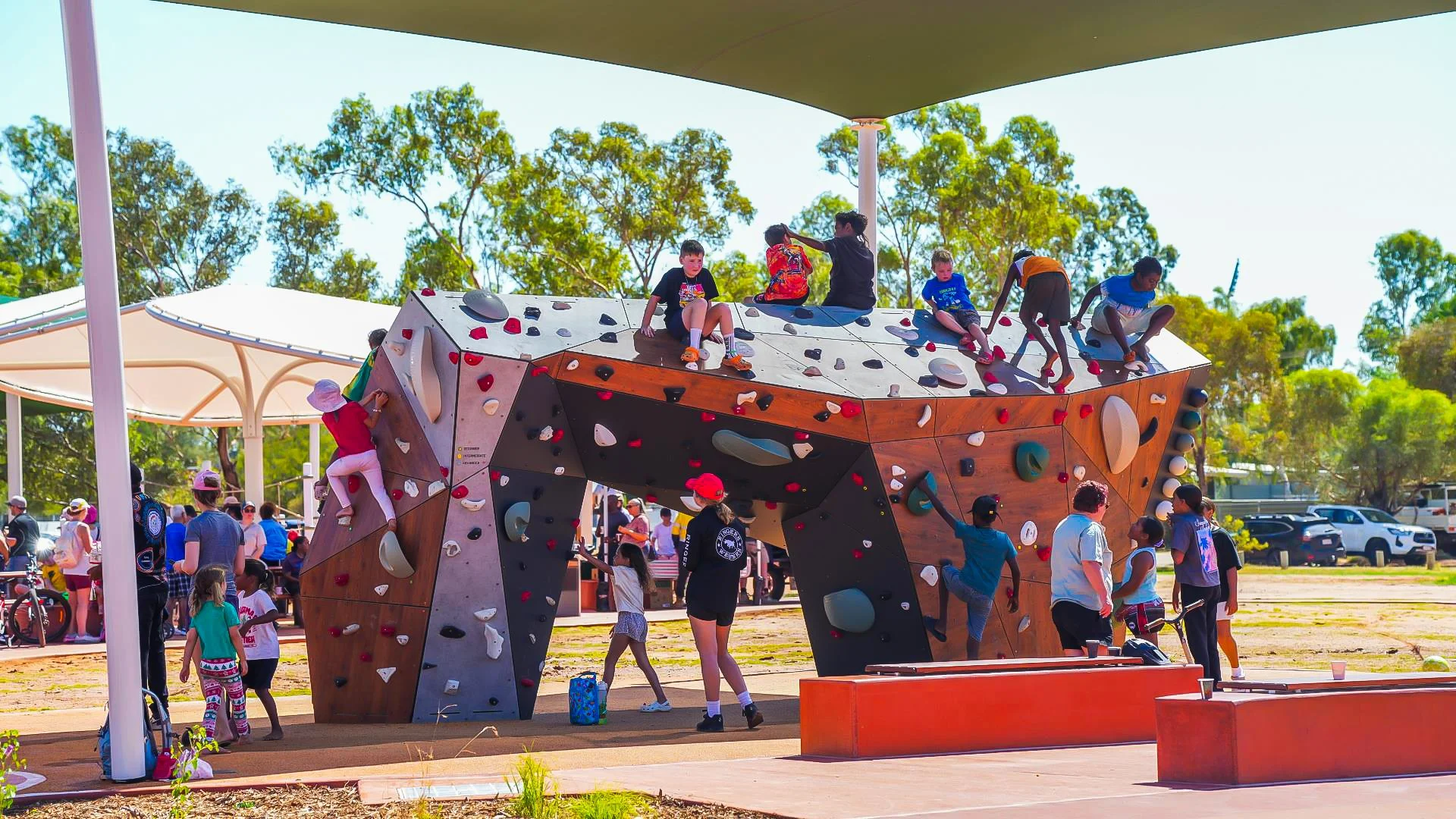
In schoolyards and public spaces where climbing structures are introduced, teenage engagement is often gradual rather than immediate. Some watch first. Some test a single move. Others gather nearby before participating at all.
Over time, the structure becomes a place to return to - not only to climb, but to meet, pause, and observe. We’ve seen it used independently, socially, competitively, and cooperatively, often within the same day.
This kind of behavioural flexibility is difficult to script, but it consistently emerges when movement isn’t over-prescribed and when structures are integrated into their surroundings with intent.

Designing With Intention - and in Collaboration
Designing for teenagers isn’t about adding bigger or louder elements. More often, it’s about creating opportunities that are open-ended, durable, and respectful of how young people choose to engage with space.
Achieving this relies on collaboration. We work closely with landscape architects, councils, civil contractors, and broader project teams to understand site conditions, circulation, adjacencies, and community context - and to shape responses that feel appropriate rather than imposed.
Depending on the project, this may involve integrating one of our standard BOULDERING® forms into a broader landscape or precinct design, or developing a fully custom solution where form, scale, finishes, and local narrative respond directly to place. Both approaches can deliver strong outcomes when guided by intent, context, and collaboration.
Looking Ahead
Designing for teenagers is rarely about a single answer. It’s about recognising a gap in public space provision and responding with care, observation, and thoughtful design.
In future posts, we’ll continue to explore how this thinking applies to other common challenges in public space - including mixed-age environments, residual spaces, and non-competitive movement.
Often, the most effective outcomes aren’t achieved by adding more, but by integrating the right elements in the right way.
References
Bradley, G. (2010). Skate parks as sites for adolescent development. Griffith University Research Repository.
https://research-repository.griffith.edu.au/handle/10072/33224
Krüger, A. et al. (2019). Effects of climbing activities on self-efficacy and physical competence in adolescents. National Library of Medicine.
https://pmc.ncbi.nlm.nih.gov/articles/PMC6524345/
Related projects:
See how climbing has been integrated into school and community spaces across Australia.
View selected projects
